Archive for the '01 DIPLOMA WORKS' Category

TRANSITIONAL HOUSING

Friday, December 4th, 2020
TRANSITIONAL HOUSING
An Expansion Strategy for SPRAR Refugee Second Reception
[by Emad Lajevardi, 2019–2020]

The thesis addresses the challenges of second-stage refugee reception, highlighting how existing housing solutions often fail to meet the spatial, safety, cultural and emotional needs of forcibly displaced people. Drawing on migration research and the concept of uncertain living, the project develops a design methodology aimed at creating transitional environments that alleviate the stresses of post-displacement resettlement. Applied to the expansion of the SPRAR system in Milan, the proposal envisions supportive housing that guides refugees from their arrival in Italy to the point of self-reliance, turning shelter into a sanctuary and a space for recovery.

To look inside > click here

CO-LIVING

Friday, December 4th, 2020
CO-LIVING
Proposal for an Innovative Age-Friendly Cohabitation in Aler’s Estate
[by Ilaria Bianchi, 2019–2020]

The thesis explores innovative co-living models designed for older adults (65+), aiming to reduce isolation, encourage social interaction and provide a supportive environment without removing residents from their familiar neighborhood. By examining existing co-living practices and relevant case studies, the project identifies spatial strategies and shared services suited to elderly users with mild vulnerabilities. Applied to an Aler-owned housing estate, the proposal introduces typological transformations and common spaces to promote active, intergenerational living while supporting independent lifestyles.

To look inside > click here

ZERO TYPE

Thursday, December 3rd, 2020

ZERO TYPE
Manual Against Typological Stereotypes
[by Morena Amendolagine & Michela Stamin, 2019–2020]

The thesis defines a “zero type”: a primary housing model capable of overcoming typological stereotypes by identifying the essential features that allow long-term spatial flexibility. The research compares nineteenth-century residential buildings with modern and contemporary cases to determine which architectural qualities enable spaces to adapt to changing needs without structural intervention. Four categories of flexibility are examined: constructive, technological, functional and typological. The work concludes with a set of guidelines tested on a Milan case study, showing how distributive neutrality, adaptable layouts and reduced over-dimensioning can generate resilient dwellings suitable for diverse and evolving ways of living.

To look inside > click here

BEYOND RETROFITTING

Thursday, December 3rd, 2020
BEYOND RETROFITTING
Investigating the Role of Spatial Quality in Energy Performance Strategies
[by Alice Cajelli & Gianluca Guiu, 2019–2020]

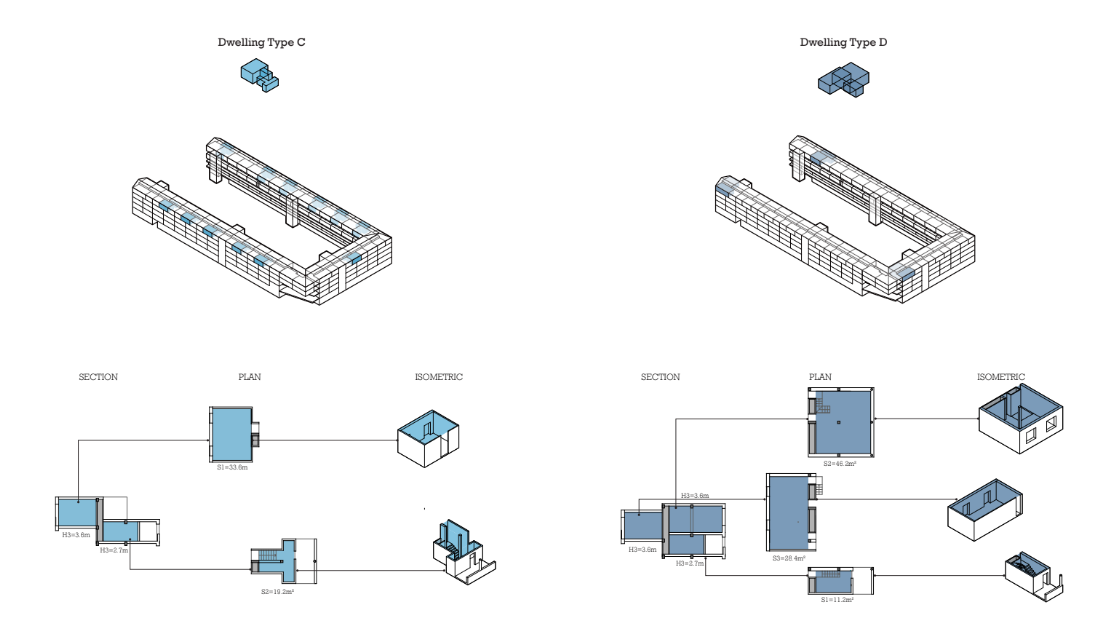
The thesis investigates how spatial quality can enhance energy retrofitting strategies, moving beyond a purely technical approach to the renovation of existing social housing. The chosen case study – a residential complex in the Romolo district of Milan – serves as a testing ground to explore how typological reorganization, improved dwelling layouts, upgraded communal spaces and environmental devices can simultaneously increase comfort, efficiency, livability and social interaction. Combining energy analysis, spatial assessment and design scenarios, the thesis proposes a retrofitting model that integrates environmental sustainability with the qualitative improvement of everyday living conditions.

To look inside > click here

ORDINARY COURTYARDS

Thursday, December 3rd, 2020
ORDINARY COURTYARDS
[by Valeria Righetti & Marta Sciarra, 2019-2020]
During lockdown, ordinary courtyards revealed an unexpected potential: previously neglected spaces used as parking or storage became places for new forms of daily life.
The project investigates how these semi-private domestic courtyards can become a new model of public space in the post-pandemic city.
Applied to a Pilot Block in NoLo (Milan), the strategy aims to open property boundaries, activate ground floors facing the courtyards, and introduce shared activities.
By rethinking courtyards through the lens of the Commons, the project suggests how these spaces could help address social, housing and environmental issues, stimulate local economies and strengthen neighborhood interactions across different urban scales.

To look inside >

CIÖNDÒL

Wednesday, July 31st, 2019
CIÖNDÒL
A Public Space for Mobile Residents in Borno
[by Irene Comini, July 2019]

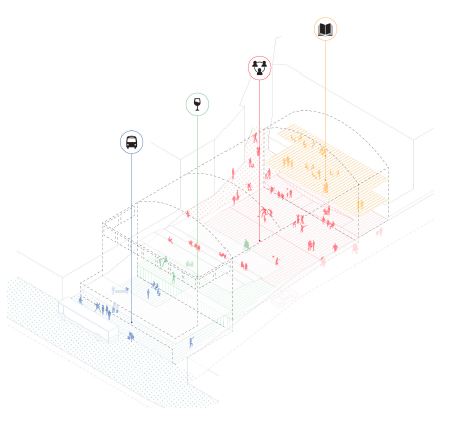
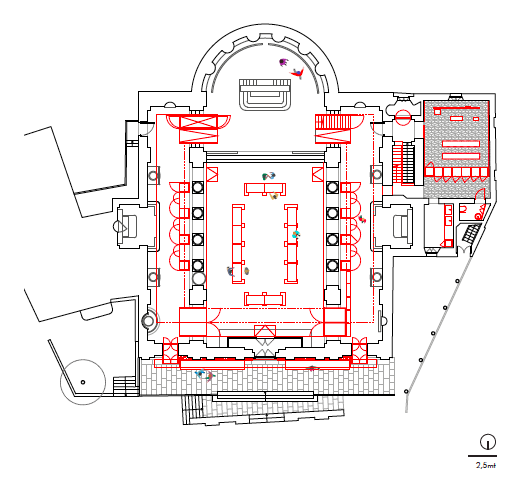
Borno is an isolated alpine village where many inhabitants commute long hours every day for work or study. Interviews and daily-life reconstructions reveal how this mobile lifestyle reduces their participation in the social life of the village. The project reactivates the abandoned Cinema Pineta, once a central community space, and transforms it into a new public place designed to support the needs of mobile residents. The name “Cìöndöl”, from the local dialect, expresses both moving back and forth and lingering to chat, capturing the dual spirit of the proposal.

To look inside > click here

CO-LIVING

Wednesday, July 31st, 2019
CO-LIVING
A strategy for the future city housing
[by Laura Vanazzi, July 2019]

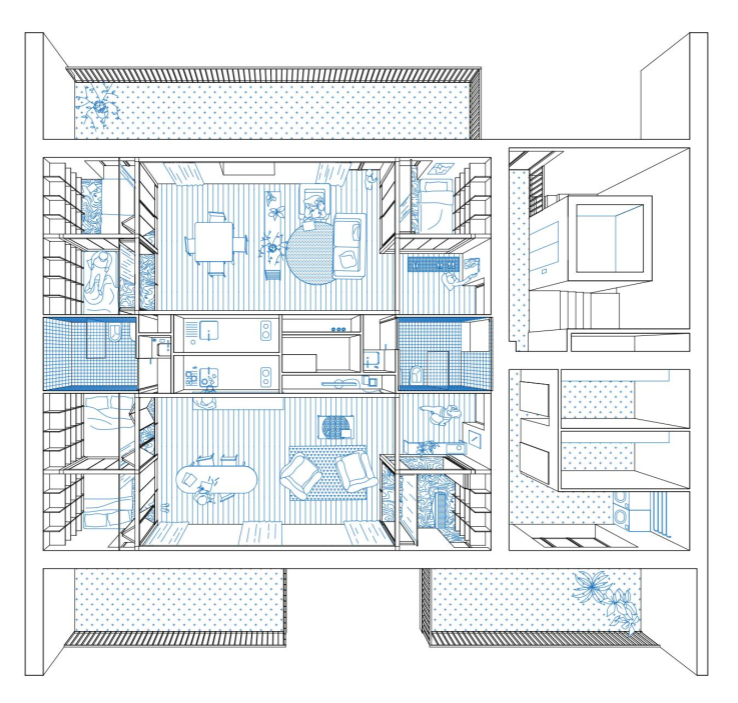
This research is inspired by the studies in Politecnico di Milano at the department of Architecture and Urban Studies about the evolution of dwellings practices and the need of new spaces, policies and processes, in the contemporary housing scene in Italy. What emerges is a widespread of co-living practices, which do not regard only Italy but the entire world. Stimulated by these previous analysis, the thesis explores the topic of the co-habitation in order to construct a solid panoramic view and propose a design strategy for a co-living apartment.

To look inside > click here

RIPENSARE GLI SPAZI DELL’INFRASTRUTTURA

Wednesday, July 31st, 2019
RIPENSARE GLI SPAZI DELL’INFRASTRUTTURA
Strategies for reprogramming the interchanges of Milan’s eastern ring road
[by Antonio Lento, April 2019]

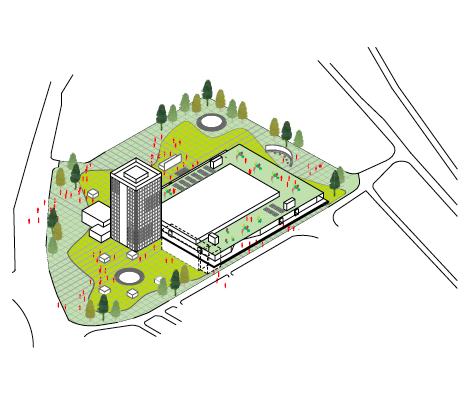
The thesis examines how the unused voids within Milan’s eastern ring-road interchanges can be reclaimed as new collective spaces. Through the analysis of mobility, open-space systems and the urban fabric, the project highlights the strategic role of these infrastructural gaps and explores how the city can reintegrate them. The proposed scenarios for 2030 reinterpret the interchanges as places where infrastructure, landscape and architecture generate new social and spatial opportunities.

To look inside > click here

IL TEMPO CHE SFUGGE ALLA STORIA

Wednesday, July 31st, 2019
IL TEMPO CHE SFUGGE ALLA STORIA
A strategy for reactivating the Marchiondi complex
[by Tinto Miriam, 2017–2018]

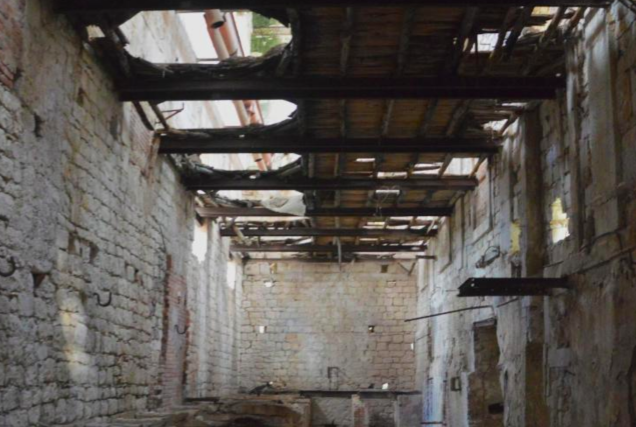
This thesis investigates the long-abandoned Marchiondi Spagliardi Institute in Baggio, a masterpiece of Italian brutalism now trapped between administrative conflict, failed restoration attempts and the absence of a clear cultural stance on modern heritage. Through critical and historical analysis, the research interprets the building not as a ruin of the past but as a condition produced by contemporary neglect. The project explores “architectural thinking” as a tool for repairing places marked by social, spatial and symbolic fragmentation, proposing new ways for the Marchiondi to re-enter the life of the city.

To look inside > click here

YOUTH COMMUNE

Wednesday, July 31st, 2019
YOUTH COMMUNE
Re-Thinking modernist architecture according to contemporary conditions
[by Vigan Zika, April 2019]

The “Rilindja” Media House building, was one of the victims of this process, its architecture, program and history were altered, it lost its importance, and as a result, a huge part of the architectural and historical heritage of Kosovo was erased.
These aspects introduced two key questions for the project: how a disfigured building in the city of Pristina can be transformed into an active social intersection between the city and its citizens? and how does the present situation affect the memory of the past?

To look inside > click here

OPPORTUNITIES

Wednesday, July 31st, 2019
OPPORTUNITIES
A strategy for the adaptive reuse of churches
[by Lorenzo Sizzi, April 2019]

Opportunities arises from the desire to conceive a strategy capable of preventing the practice of uncontrolled and unconscious reuse of churches. The strategy is organized in two phases. The first is based on the study of the work of two architects and is aimed at understanding the church building, which culminates in the definition of four fundamental properties. The second concerns re-use and, thanks to the theoretical support of the documents of a workshop and three conferences on the subject, the aim is to analyze a selection of case studies by experimenting a qualitative evaluation method that works by dividing the intervention into two themes: program and spatiality.

To look inside > click here

FROM WASTELAND TO WETLAND

Wednesday, July 31st, 2019
FROM WASTELAND TO WETLAND
The cityscape as green transition toward Ecological Civilization
[by Riccardo Mameli, April 2019]

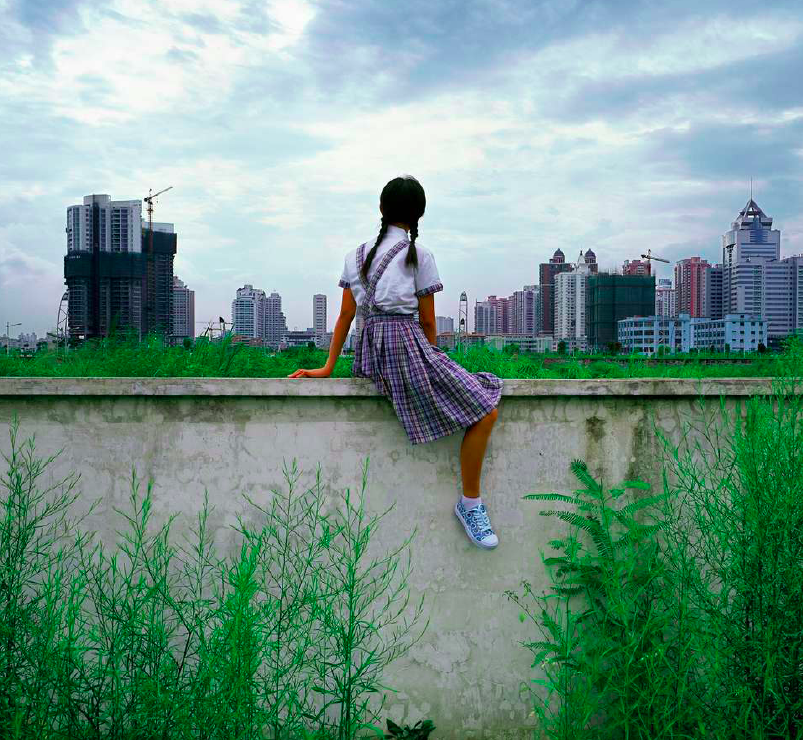
The east Bund of Huangpu River is now required to include public space quality enhancement, ecological environment optimization and cultural function clustering. It is the perfect occasion for a re ection of the redevelopment of brown-fields in green elds. e purpose of the present thesis is to analyze and understand the current social, economic and political situation, in order to propose a suitable model capable to actively reinterpret the Chinese landscape.

To look inside > click here

RE-ACTIVATION-THROUGH INTEGRATION

Wednesday, July 31st, 2019
RE-ACTIVATION-THROUGH INTEGRATION
The case of Campo Marzio in Vicenza
[by Federico Riva, July 2018]
The research aims to explore the relation between individuals and places in the contemporary city and to investigate the way the social dynamics can foster the process of integration in a more and more diverse and multi-ethnic society, taking as starting point the case of Campo Marzio in Vicenza.
To look inside > click here

WELFARE SPACE

Thursday, July 13th, 2017
WELFARE SPACE
Architecture as a tool for social regeneration in peripheral contexts
[by Nicola Sirugo, 2016–2017]

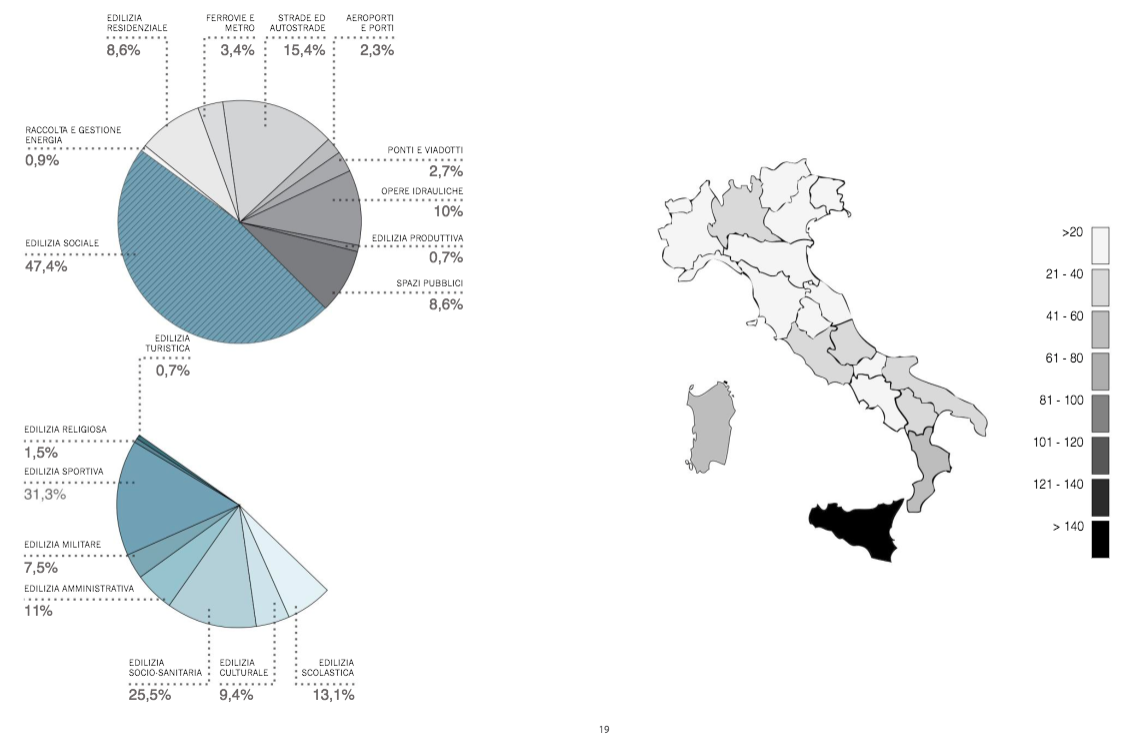
Pozzallo, a peripheral town on the Sicilian coast, exemplifies the condition of many Italian provinces marked by geographic isolation and social fragility. Starting from an analysis of the town’s criticalities and specific territorial qualities, the project explores architecture as an active tool for addressing contemporary needs. The proposal focuses on the reactivation of a twentieth-century industrial complex, abandoned for decades, transforming it into a welfare-oriented space. Through reuse and reprogramming, the project seeks to reconnect the community with its history and to re-establish collective identity as a living and operative resource.

To look inside > click here

IN / TRANSIT

Thursday, July 13th, 2017
IN / TRANSIT
Permanent architectures for temporary living
[Eugenio Nuzzo, 2017]

Economic transition, labour instability, and changing family structures have reshaped contemporary housing needs, making temporary living conditions increasingly widespread. The project addresses temporary housing as an emerging social necessity, focusing on individuals and families facing economic vulnerability. Positioned between research and design, In Transit investigates causes, spatial forms, and architectural strategies to define a coherent and lasting framework for temporary residency.

To look inside > click here